

Asking “So What?” can make your approach to leadership, life, business, family and relationships richer and with an ease, depth, profundity and honesty that disarms, enrolls, inspires and makes a difference.
There’s a question I ask people that tends to stop them mid-sentence.
They’ve just finished telling me about the thing that’s been keeping them up at night — the deal that fell through, the relationship that went sideways, the mistake they made three years ago that still gnaws at them in the shower. They’ve described it all with the gravity of someone narrating a documentary about their own catastrophe.
And I ask: “So what?”
Not dismissively. Not cruelly. But as an honest invitation to look at what they’ve been carrying and ask whether it weighs what they think it weighs.
Most of the time, it doesn’t.
The Weight That Isn’t There
Here’s what I’ve noticed across thirty years of working with entrepreneurs, leaders, and people who are genuinely committed to building something that matters: the thing that keeps them stuck is almost never the actual problem. It’s the significance they’ve layered on top of it.
They don’t just have a cash flow issue — they have proof that they’re financially irresponsible. They didn’t just lose a client — they confirmed the fear that they’re not good enough. The event becomes a verdict. The circumstance becomes an identity.
I call this living inside a soap opera.
In a soap opera, everything is dramatic. Every conversation is loaded. Every setback is a catastrophe, every success a temporary reprieve before the next crisis. The music is always swelling. And the character — that’s you, by the way — never actually resolves anything, because resolution would end the show.
Sound familiar?

The X/Y Pattern Behind It All
When I work with clients, I use something I call X/Y Technology. The structure is simple, and it’s devastatingly accurate once you see it.
You avoid X — the uncomfortable truth — with a seemingly honorable intention of Y.
Here’s how it plays out with significance:
X (what you’re avoiding): Confronting the raw, undecorated reality that this thing you’ve made so significant might not actually mean what you’ve decided it means. That your failure doesn’t define you. That your success doesn’t either. That, at a cosmic level, the drama you’re living inside is optional.
Y (the noble-sounding justification): “I take things seriously because I care.” Or: “This matters to me because I have high standards.” Or the really sneaky one: “I can’t just let this go — that would be irresponsible.”
The result? You stay trapped. You keep carrying weight that doesn’t exist. And the very seriousness you believe makes you responsible actually keeps you from the clear-eyed action that responsibility requires.
The Mirror Maze
This is what I call the Mirror Maze — the exhausting bounce between two distorting reflections.
One mirror says: This is incredibly significant. I must treat it with gravity. The other says: Nothing matters, so why bother?
Back and forth. Significance. Nihilism. Caring too much. Caring too little. And each mirror feels like the only alternative to the other.
But there’s a door in this maze. And it doesn’t lead to either mirror.
It leads out.
The Door: Choice from Nothingness
The way out isn’t optimism. It isn’t “positive thinking.” It isn’t deciding everything is fine. Those are just more sophisticated versions of the same soap opera.
The way out is what I call choice from nothingness — a concept rooted deeply in Zen Buddhism and Heidegger’s existential philosophy, and forged in my own lived experience of hitting bottom and rebuilding from a place where all the old meanings had collapsed.
Choice from nothingness means this: in the absence of any cosmic mandate telling you what matters, you get to choose. Not because the universe handed you a script, but because there is no script. The blank slate isn’t empty. It’s free.
When you strip away the inherited significance — the “shoulds,” the stories, the identity-level meanings you’ve bolted onto ordinary events — what remains isn’t emptiness. What remains is the capacity to choose what you’ll commit to, freshly, right now, without the deadweight of drama.
This is what I mean by the insignificance of the significant.
That deal that fell through? It happened. That’s all. The forty-seven meanings you’ve attached to it — those are your additions. And you can set them down any time you choose.

But Doesn’t That Make Life Meaningless?
This is where people push back, and I understand why. If nothing is inherently significant, doesn’t that lead to apathy? To nihilism? To lying on the couch watching Netflix for the rest of your life?
No. And here’s the paradox that changes everything: when you stop making things significant, you actually care more.
I call this distinction “When You Don’t Care, You Care More.”
Think about it. When you’re drowning in the significance of a sales call — when the outcome will determine whether you’re a success or a failure, whether you’ll make rent, whether your business is viable — how present are you, really? How much genuine attention can you give the human being on the other end of that call when you’re performing in your own soap opera?
Now imagine walking into that same call having already answered “so what?” honestly. The drama is gone. The identity stakes have been removed. What’s left? Just you and another person, two human beings in a conversation. You can actually listen. You can actually respond to what’s in front of you rather than to the movie playing in your head.
That’s the significance of the insignificant. The small, undramatic moments — being present, telling the truth, keeping a promise — turn out to be where all the power lives.
Bookaka: Getting Honest About What Doesn’t Matter
I have a word for the stuff we dress up as profound but that actually makes no difference: bookaka.
Bookaka is the strategic plan that never gets executed. The mission statement nobody reads. The “deep insight” you had in the shower that you’ve told fourteen people about but never acted on. The self-help book you highlighted the hell out of but whose principles you’ve never once applied under pressure.
Getting truthful about your bookaka is one of the most liberating things you can do. Because once you stop pretending that these things are significant, you free up an enormous amount of energy for the things that actually are.
And here’s the key: you get to decide which is which. That’s the choice. That’s the freedom.
What This Looks Like in Practice
A client of mine — a very successful startup founder — came to me overwhelmed. Every decision felt monumental. Every quarterly review felt like a referendum on his worth as a leader. He was exhausted, not from the work itself, but from the weight of significance he was piling onto every aspect of it.
We worked with the X/Y pattern. His X — what he was avoiding — was the terrifying simplicity that most of these decisions didn’t actually matter as much as he was making them matter. His Y — the honorable cover story — was “I care deeply about my people and this mission.”
He did care. That was true. But the caring had become a cage. It had become significant in the soap opera sense — loaded with drama, identity, and unnecessary suffering.
When he saw it, he laughed. Not a bitter laugh. A relieved one. The kind of laugh that comes when you realize the monster under the bed was a shadow.
He didn’t stop caring. He started caring cleanly — without the drama, without the self-imposed significance, without the mirror maze of “am I a great leader or a terrible one?”
He just led. And he was better at it than he’d ever been.

The Invitation
I’m not asking you to stop caring about your life. I’m inviting you to notice where you’ve confused caring with drama. Where you’ve mistaken significance for seriousness. Where you’ve turned ordinary human experiences into existential crises because somewhere along the way, you picked up the belief that things have to mean something in order to matter.
They don’t. And that’s the best news you’ll hear all week.
Because once you set down the weight of significance, you’re free to pick up something better: the power of choice in an open field, with nothing to prove and nowhere to hide.
So what?
Exactly.
Sunil Bhaskaran is a transformational coach and CEO of Global Communities LLC. He integrates Zen Buddhism, Heideggerian philosophy, and 30+ years of embodied practice to help entrepreneurs and leaders break free from the patterns that keep them stuck. His proprietary X/Y Technology has helped thousands of professionals worldwide. Learn more at sunilbhaskaran.com.

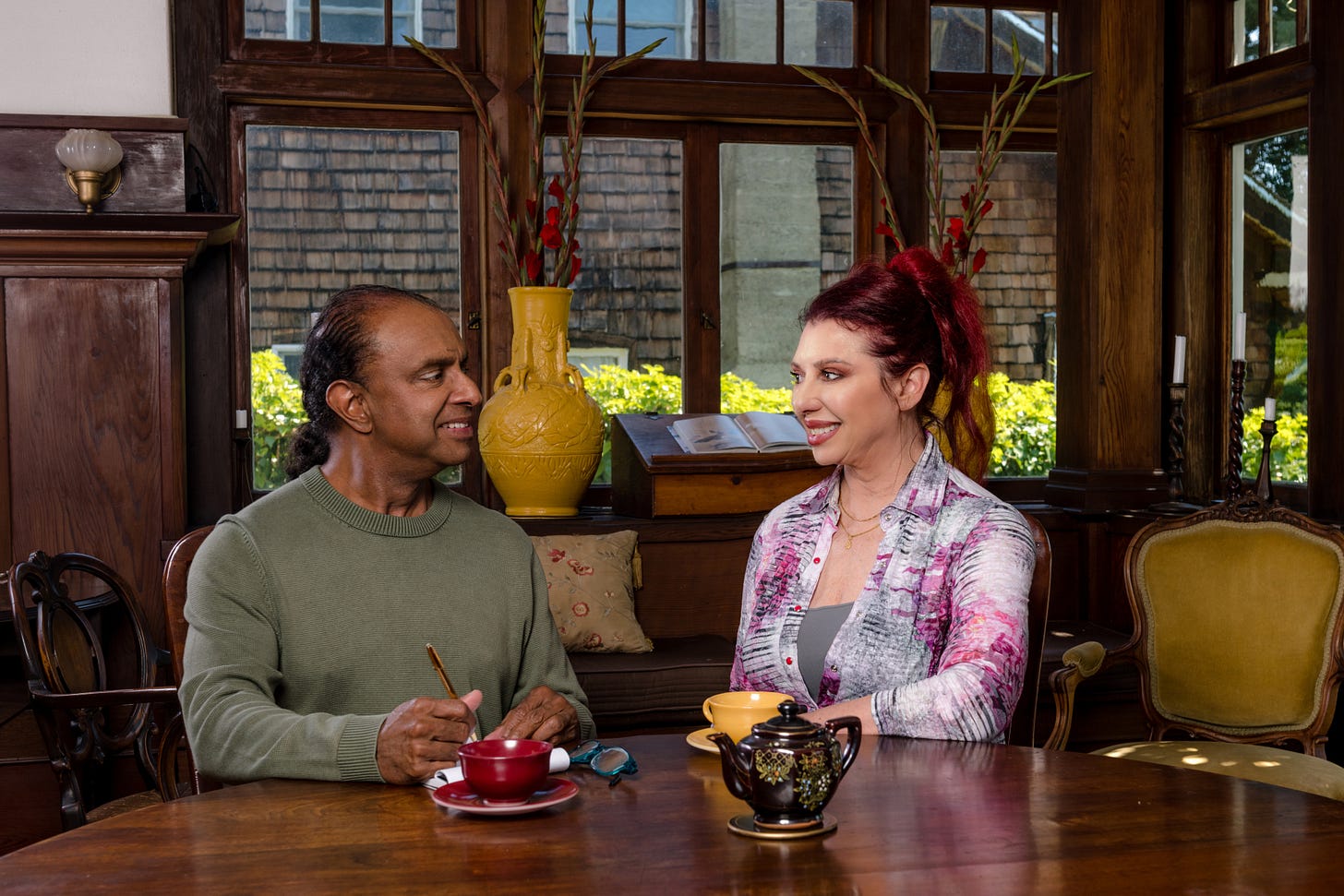

Since 1991, I’ve been reflecting on, designing, and implementing methodologies and systems for bringing a transcendent, creative and innovative approach to critical aspects of entrepreneurship.

